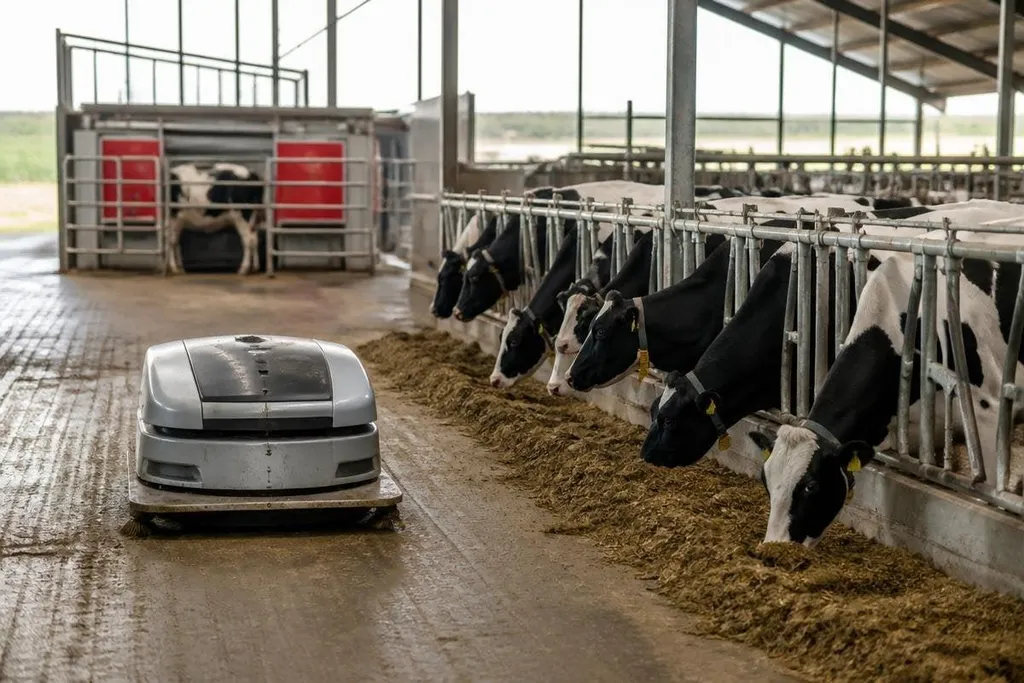
A dairy barn does not stop at the end of a workday. Cows still need feed, clean floors, health checks, and milking, so robots are taking on repeat tasks that happen around the clock.
For farm owners, the value is practical: fewer routine jobs for people, more regular care for animals, and better records when something changes.
Quick read
- Robots handle milking, feeding, floor cleaning, and animal checks.
- Sensors can spot changes in movement, eating, milk, or body temperature.
- Farms still need people for repairs, decisions, animal care, and unusual cases.
The work robots can handle
Milking robots let a cow enter a station when she chooses. The system identifies the animal, cleans the teats, attaches the milking cups, and records the milk. A farm worker still checks the equipment and responds when a cow needs help.
Feed robots take a different route. They push feed back toward the cows after animals move it away from the feeding line. Some systems also mix or deliver feed, while other machines scrape manure from walking areas. These jobs repeat many times, which gives automation a clear task to handle.
The useful detail is repetition. A robot does not need to replace a whole farm team to matter. It can take one job that returns every few hours and keep doing it with the same process.
Animal health is where the data matters
A livestock robot can collect more than work records. Cameras, weight sensors, milk meters, and movement sensors can show changes in an animal's normal pattern.
A cow that visits the feed area less often may need attention. A change in walking can point to a hoof problem.
A shift in milk output can give a worker another reason to check the animal. These signals do not diagnose every illness, and they don't remove the need for a trained person. They help decide which animal needs a closer look first.
The same idea applies to pigs, poultry, and sheep, though the equipment differs. Cameras can watch movement and crowding. Feed systems can record intake. Environmental sensors can check heat, humidity, air quality, or water flow inside a barn.
Those readings can show where a barn needs more staff time, or where a robot could take on routine checks. Robot24.com livestock robot reports can tie that claim to the farm, sensor setup, test date, and measured result. The next question is why that need is growing.
Why the need is growing
Farm work has fixed demands even when staffing changes. Animals still need care on weekends, during holidays, and at night. That machine can cover a repeat route during those hours, while people focus on births, injuries, repairs, and decisions that need judgment.
Labor is only one part of the reason. Records also matter. A connected milking system can store data for each cow, while a feed or cleaning robot can log when a task ran. That record helps a farm compare a problem with earlier changes in feed, housing, or animal behavior.
The cost and site work can limit adoption. A robot may need new flooring, charging points, gates, network coverage, or changes to the barn layout. The farm must also plan for cleaning, spare parts, software updates, and a failure during a busy period.
I think livestock robots earn their place when they remove a repeat task without making animal care harder.
What remains unproven
A smooth demonstration does not show how a system handles mud, blocked paths, sick animals, power loss, or a sensor covered in dirt. Those conditions decide whether a machine helps on a working farm.
The farm also needs a clear answer when the robot stops. Who gets the alert? Who checks the animal? How fast can the farm get a part or a service visit? A system that records every fault but leaves the barn waiting still creates work.
Before buying, check these points:
- Task fit: Name the exact job and how often it repeats.
- Barn changes: List the floor, gate, power, water, and network work.
- Failure plan: Set a manual process for outages and blocked routes.
- Animal data: Ask which sensors collect data and who can view it.
- Service access: Confirm parts, training, repair times, and software support.
- Human work: Keep clear responsibility for animal checks and care.
The next useful proof will come from farms that publish what happened after installation: task uptime, repair calls, animal outcomes, and the hours people still spend each week. Until those records are common, livestock robots look like practical farm tools, but the full cost of running them remains an open question.